From runway to reality: Adapting fashion to real life
A deeper look at what actually shapes modern fashion
Open any fashion page or search for “season’s trends” and you’ll almost certainly see endless lists like: lilac, leather, polka dots, fringe, blazers, minimalism… It creates the impression that these words define what’s currently in fashion.
But lists like these say very little about what actually feels contemporary today. Color, print, fabric, or the name of a garment are simply characteristics — they don’t become trends on their own.
But lists like these say very little about what actually feels contemporary today. Color, print, fabric, or the name of a garment are simply characteristics — they don’t become trends on their own.
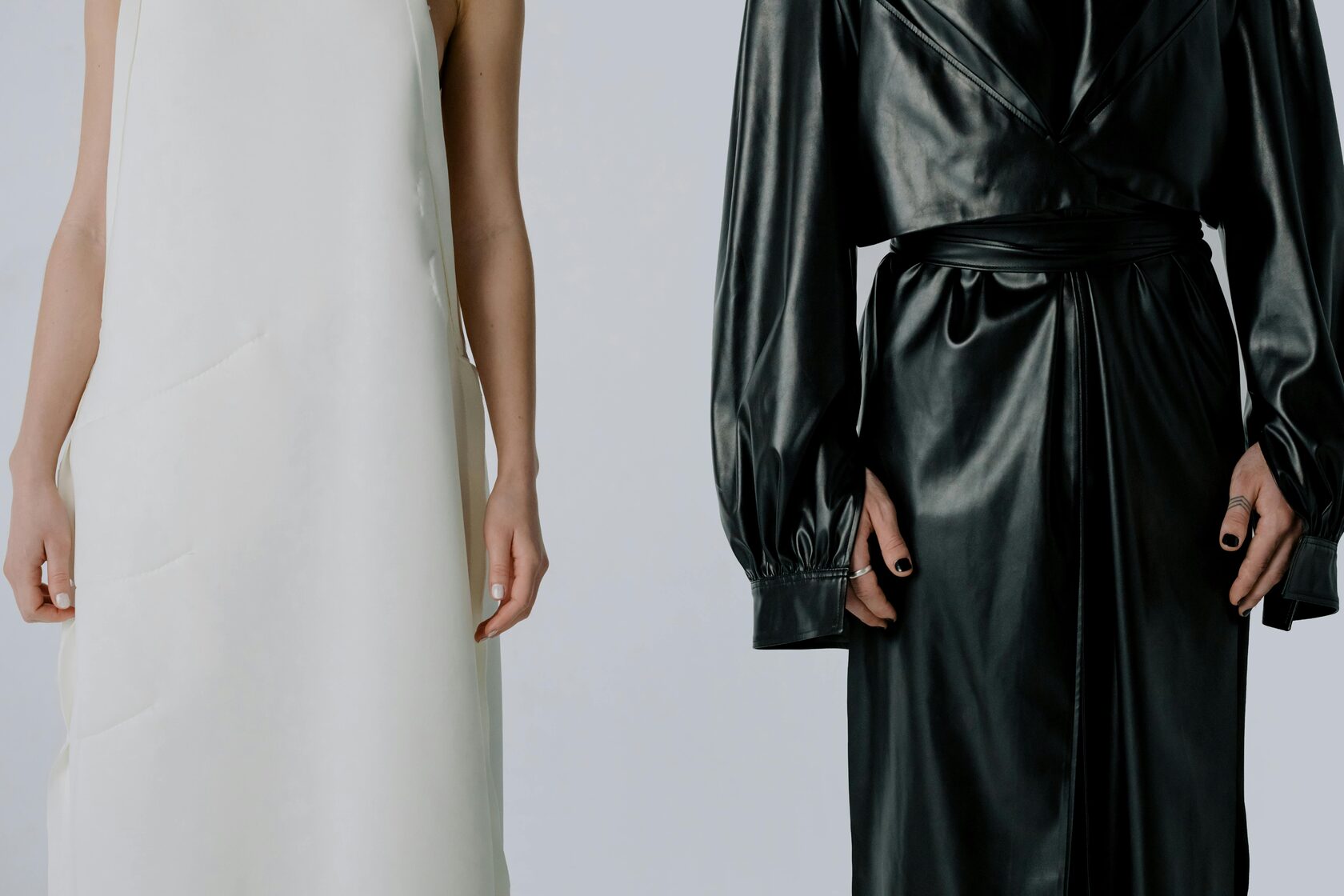
Color doesn’t make a garment modern
You can repeat “orange is in this season” as much as you like, but if a dress has the silhouette of a past decade, no color will update it.
And the opposite is also true: a garment with a contemporary cut will look modern regardless of its shade.
And the opposite is also true: a garment with a contemporary cut will look modern regardless of its shade.
The same goes for prints. Checks, polka dots, zebra — these aren’t trends. They’ve been present in fashion for decades. What matters isn’t the print itself but the overall shape, construction, and proportions of the item.
Fabric doesn’t define a trend either
Leather, suede, velvet, linen, satin — none of these materials “come back” in the way headlines suggest.
Take a leather jacket mass-produced fifteen years ago: it won’t look current just because someone wrote “leather is trending again.” What matters is the cut — the shoulders, the length, the proportions — not the fact that it’s leather.
Take a leather jacket mass-produced fifteen years ago: it won’t look current just because someone wrote “leather is trending again.” What matters is the cut — the shoulders, the length, the proportions — not the fact that it’s leather.
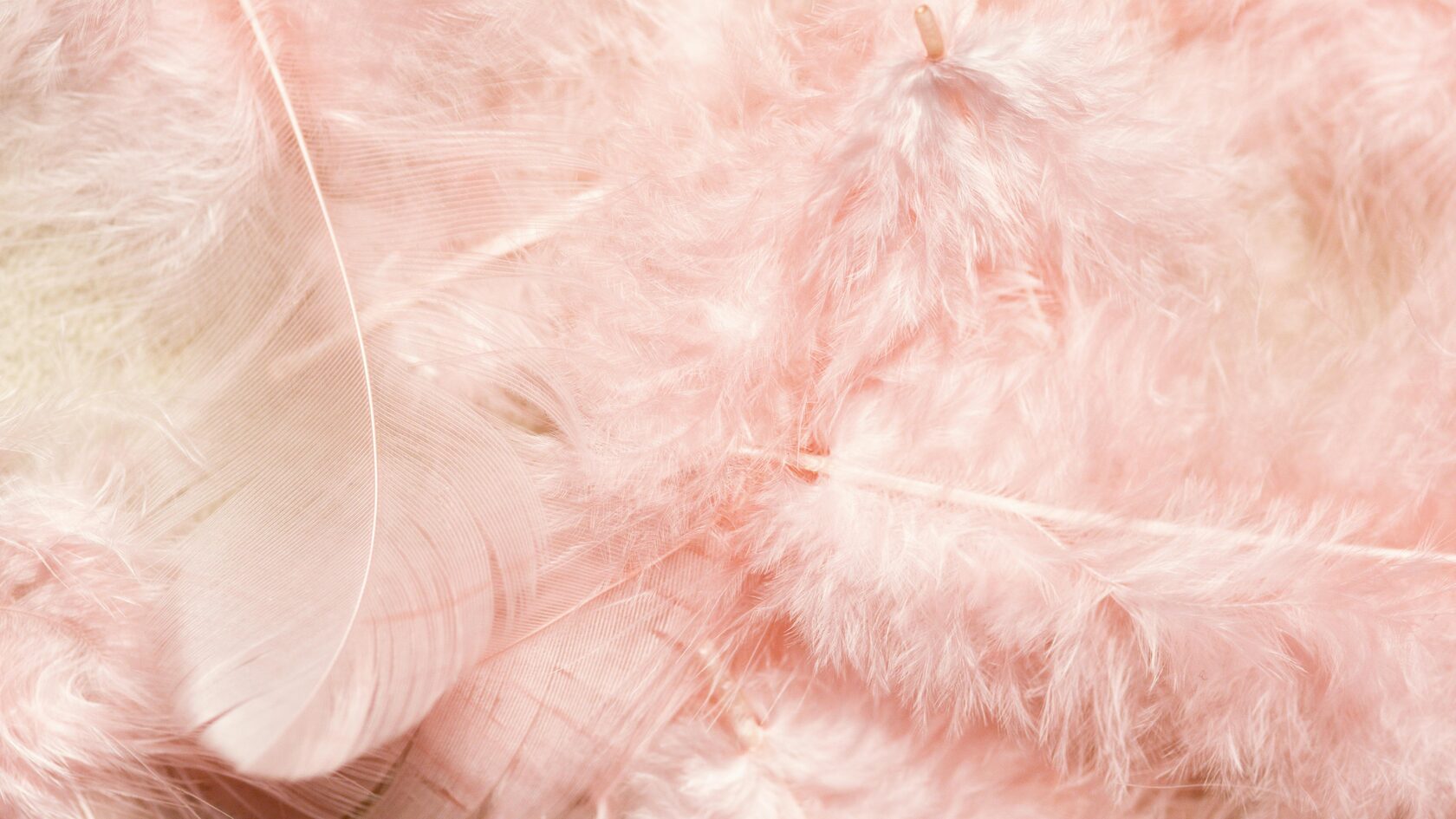
The same applies to embellishments. Sequins, feathers, rhinestones are decorative elements, not trend indicators.
A garment’s name tells you nothing about its relevance
A blazer is still a blazer. A skirt is still a skirt. A coat is still a coat.
Names don’t determine modernity — shapes do. That’s why statements like “trench coats are back” belong more to marketing than to reality. What’s actually changing are silhouettes and proportions, not the existence of the trench coat itself.
Names don’t determine modernity — shapes do. That’s why statements like “trench coats are back” belong more to marketing than to reality. What’s actually changing are silhouettes and proportions, not the existence of the trench coat itself.
And what about styles — minimalism, romanticism, and other “-isms”?
Styles are often presented as if they appear and disappear from fashion entirely.
Today minimalism, tomorrow romanticism, next week something else.
But styles don’t vanish. They’re more like languages you can use to build an outfit. A sharp blazer, a romantic dress, and chunky boots can effortlessly coexist in the same wardrobe.
What changes over time is how a style is interpreted — what shapes define minimalism today, what a romantic silhouette looks like now, which proportions feel contemporary within each language.
Today minimalism, tomorrow romanticism, next week something else.
But styles don’t vanish. They’re more like languages you can use to build an outfit. A sharp blazer, a romantic dress, and chunky boots can effortlessly coexist in the same wardrobe.
What changes over time is how a style is interpreted — what shapes define minimalism today, what a romantic silhouette looks like now, which proportions feel contemporary within each language.
Not a trend:
- color/print
- texture/embellishment
- type of garment
- style
So what should we actually call a trend?
This is where runway shows matter. They don’t provide lists — they provide a visual language.
Runway collections reveal:
This is especially clear in prêt-à-porter, where runway ideas are already adapted to real life. These are the collections advanced mass-market brands react to, interpret, and translate into everyday clothing.
But the most useful approach is not to chase a specific item you saw in a show.
It’s to understand the underlying principle:
When you start seeing the runway in this way, you absorb the logic rather than the item itself. And suddenly it becomes much easier to recognize which pieces in a regular store reflect what’s happening in fashion — and which ones belong to another era.
Runway collections reveal:
- how shapes, lines, and silhouettes shift,
- which cuts feel current,
- how fabrics are combined,
- how designers construct a full look.
This is especially clear in prêt-à-porter, where runway ideas are already adapted to real life. These are the collections advanced mass-market brands react to, interpret, and translate into everyday clothing.
But the most useful approach is not to chase a specific item you saw in a show.
It’s to understand the underlying principle:
- How does the shape work?
- How is the look constructed?
- What makes it feel contemporary?
When you start seeing the runway in this way, you absorb the logic rather than the item itself. And suddenly it becomes much easier to recognize which pieces in a regular store reflect what’s happening in fashion — and which ones belong to another era.
Runway shows as a practical tool
Runway shows are not a “shop the look” catalog.
They’re a laboratory where new proportions and combinations are tested.
Mass-market brands later simplify and adapt these ideas, but the direction is set on the runway. And the more often you look at shows (or at least well-made collection reviews), the easier it becomes to notice how shapes evolve.
That’s when the transition from runway to reality stops feeling abstract.
You see an idea on the runway, notice how it shifts the silhouette, and then recognize its translation in everyday clothing — in a coat you can wear daily, in trousers, in a blazer, even in a simple button-down shirt.
They’re a laboratory where new proportions and combinations are tested.
Mass-market brands later simplify and adapt these ideas, but the direction is set on the runway. And the more often you look at shows (or at least well-made collection reviews), the easier it becomes to notice how shapes evolve.
That’s when the transition from runway to reality stops feeling abstract.
You see an idea on the runway, notice how it shifts the silhouette, and then recognize its translation in everyday clothing — in a coat you can wear daily, in trousers, in a blazer, even in a simple button-down shirt.
A trend isn’t a color, a print, or a fabric — it’s a shift in shape.
Once you learn to see these changes and read silhouettes, seasonal lists stop being necessary.
The more you train your eye, the clearer the fashion system becomes:
runway → silhouette → adaptation → your wardrobe.
Once you learn to see these changes and read silhouettes, seasonal lists stop being necessary.
The more you train your eye, the clearer the fashion system becomes:
runway → silhouette → adaptation → your wardrobe.
